
What is natural wine? The story of natural wine
What is natural wine?
Natural wine is just wine. It’s oldest, original, purest expression.
The problem is that most wine sold today isn't made that way. What fills supermarket shelves is largely an industrial product — chemically stabilised, additive-heavy, engineered for consistency rather than character. It tastes the same every year because it's designed to. That's not winemaking. That's manufacturing. Kind of like making coca-cola.
So natural wine became a term we needed. A way of saying: this one is made the original way. Just grapes, fermentation, and time.
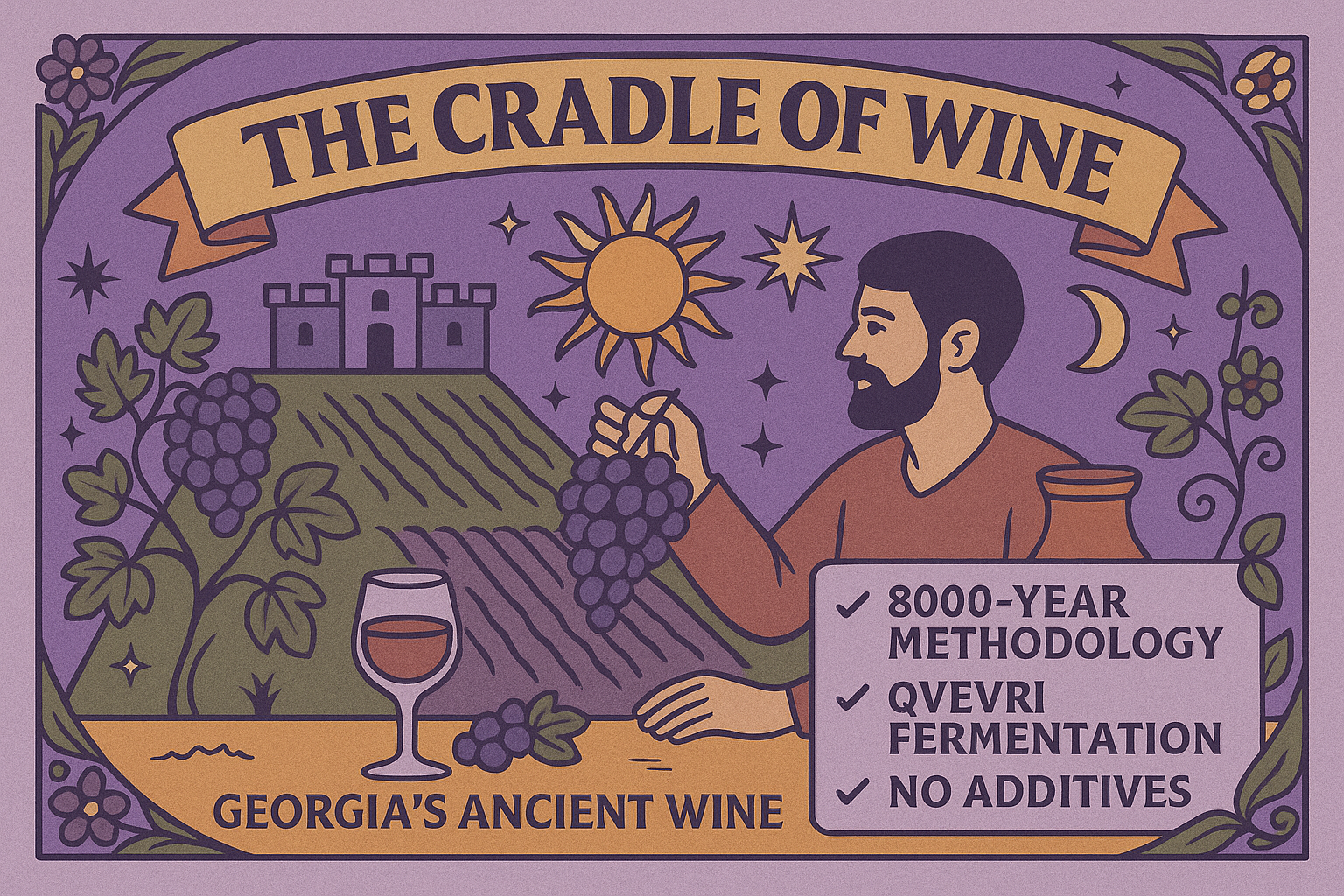
It started in Georgia — 8,000 years ago
On the southern slopes of the Caucasus mountains, somewhere between the Black Sea and the Caspian, a people called the Kartveli — the ancestors of modern Georgians — had an unusually close relationship with wild vines. The landscape was full of them. Grapes thrived in that particular soil and climate, diversifying and mutating over centuries into hundreds of distinct varieties.
At some point — and this is the part where history shades into reasonable speculation — seems like some of the Georgians figured out what happens when you crush a lot of grapes into a vessel and leave them alone. The sugars ferment. The liquid transforms. What comes out the other side is something entirely new.
In addition, what we know for certain is that the Kartveli invented the qvevri — a large clay fermentation vessel, sealed and buried underground, where grapes would ferment and age through the winter at a naturally stable temperature. Archaeological remains of these vessels, with grape residue still inside, have been carbon-dated to around 6,000 BCE. That makes Georgia the oldest confirmed origin of winemaking in the world.
The knowledge spread. The Greeks learned from the Georgians. Some historians believe the god Dionysus himself — god of wine, ecstasy, and transformation — originated in the East, tied to the ancient Colchis kingdom on Georgia's Black Sea coast. Whether or not you follow that thread, the direction of influence is clear: wine moved westward out of the Caucasus, and the rest of the world followed.
What happened in between
For most of human history, wine was natural by default. You grew grapes, crushed them, fermented them, and drank what you got. The vintage, the soil, the weather — all of it showed up in the glass.
Industrialisation changed that. By the twentieth century, winemaking had become a science of intervention: commercial yeasts to standardise fermentation, sulphites to preserve, fining agents to clarify, acidification to correct, oak chips to add flavour without the cost of barrels. The goal was consistency and volume, and profit, not character. The result was wine that was reliable, predictable, and largely interchangeable.
The natural wine movement — which gained momentum in France in the 1980s and has grown steadily since — is a rejection of that model. Not a rejection of quality, but a rejection of the idea that quality requires control. That it's all alchemy, not industry.
What natural wine actually means
There's no legally binding definition of natural wine, which frustrates some people and liberates others. In practice, it means: organic or biodynamic farming in the vineyard, wild yeast fermentation rather than commercial yeasts, no additives or heavy manipulation in the cellar, and minimal or no added sulphites.
What you get is wine that reflects its vintage honestly. A hot year tastes different from a cool one. A wine from one hillside tastes different from a wine made a kilometre away. That variability isn't a flaw — it's the point.
In Georgia, incidentally, there's no need for the term. There, wine simply means wine. What the rest of the world calls conventional wine has its own names: factory wine, modified wine, European method wine. The natural version is just the original.
What it tastes like
Impossible to generalise, and that's partly the appeal. Natural wines range from light and crystalline to deep and tannic, from bone dry to gently sweet, from pale straw to deep amber. The common thread is that what's in the glass comes from the grape and the vintage, not from a recipe.
Georgia's contribution to natural wine is particularly distinctive. A lot of wine is made in qvevri — those ancient buried clay vessels — with extended skin contact, e.g. Georgian amber wines carry a texture and depth that most white wine drinkers don't expect. Walnut, dried fruit, honey, a long finish with genuine grip. The tannins from the skins, softened by months in clay, give structure and grip without aggression.
If you're new to natural wine and want a reliable entry point, Georgian amber is a good place to start. It's serious wine that doesn't require patience to enjoy.
Why it matters
Natural wine is a return to something older than the industry that replaced it. It reconnects what's in the glass with where it came from — the soil, the season, the hands that made it.
For us at Kinto Natural, that connection is the whole point. We work directly with small Georgian producers who have been farming and fermenting this way for generations. No intermediaries inflating the price, no manipulation obscuring the wine. Just what the grape produced, in this particular place, in this particular year.
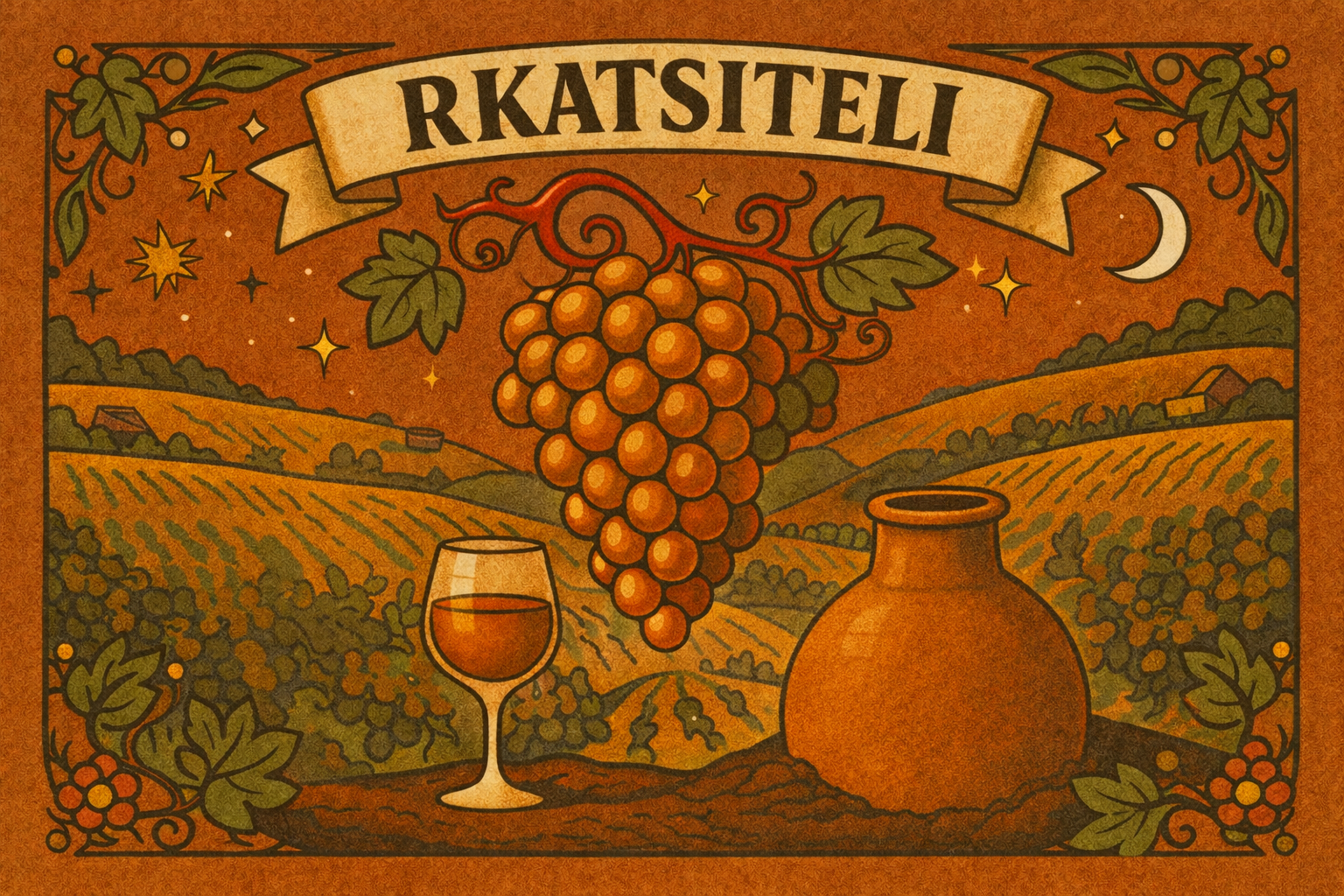
If that sounds like something worth tasting, start here: our Rkatsiteli from Lomtadze's Marani in Kakheti is one of the clearest expressions of what Georgian natural wine can be.
Check out the bottle →

Written by Otar Bedoshvili

Leave a comment
This site is protected by hCaptcha and the hCaptcha Privacy Policy and Terms of Service apply.